JIM LEHRER: Good evening, I'm Jim Lehrer. On the NewsHour tonight, the public and legal tug of war over who will be President. We chronicle the day's events, and interview Senator Lieberman, and Governor Racicot, among others, and get the analysis of Mark Shields and David Brooks. The other news of this Monday will be at the end of the program tonight.
JIM LEHRER: Vice President Gore formally challenged the Florida presidential vote today. His lawyers went to court in Tallahassee to contest the results in three Florida counties. Last night, Governor Bush was certified the winner in Florida, by 537 votes. That would give him the state's 25 electoral votes, and thus the presidency. And he went on national television last night to stake such a claim. Kwame Holman reports the events of last evening and today.
KWAME HOLMAN: Vice President Gore's contest of the vote certification in Florida became official at mid-day, when three of his lawyers marched into state court in Leon County in Tallahassee to file papers. The Gore filing charges the Florida certification includes some illegal votes and ignores some properly cast ballots. It cites Nassau County, where officials decided to submit their original tally instead of the state-mandated recount, giving Governor Bush 51 additional votes; Miami-Dade County, there a hand-count of 10,750 so-called under vote ballots on which machine counts revealed no vote for President was never done; and Palm Beach County, which finished its manual count after a deadline last night and its revised numbers were not included. This morning an exhausted Judge Charles Burton of the Palm Beach County Canvassing Board lamented that neither of those final figures nor partial figures sent to Florida Secretary of State Katherine Harris before her deadline was accepted.
JUDGE CHARLES BURTON: You know, I mean, hindsight is fine. I think looking back we probably said we could have found a few more hours here and there to get this done. It's not only the canvassing board, and we had a whole host of folks, county people and law enforcement, and we've been going about 14 days straight -- 16, 17, 18-hour days - and quite honestly, people needed a day off.
KWAME HOLMAN: Harris announced the certified tally last evening. Bush supporters gathered outside the room could be heard as she read.
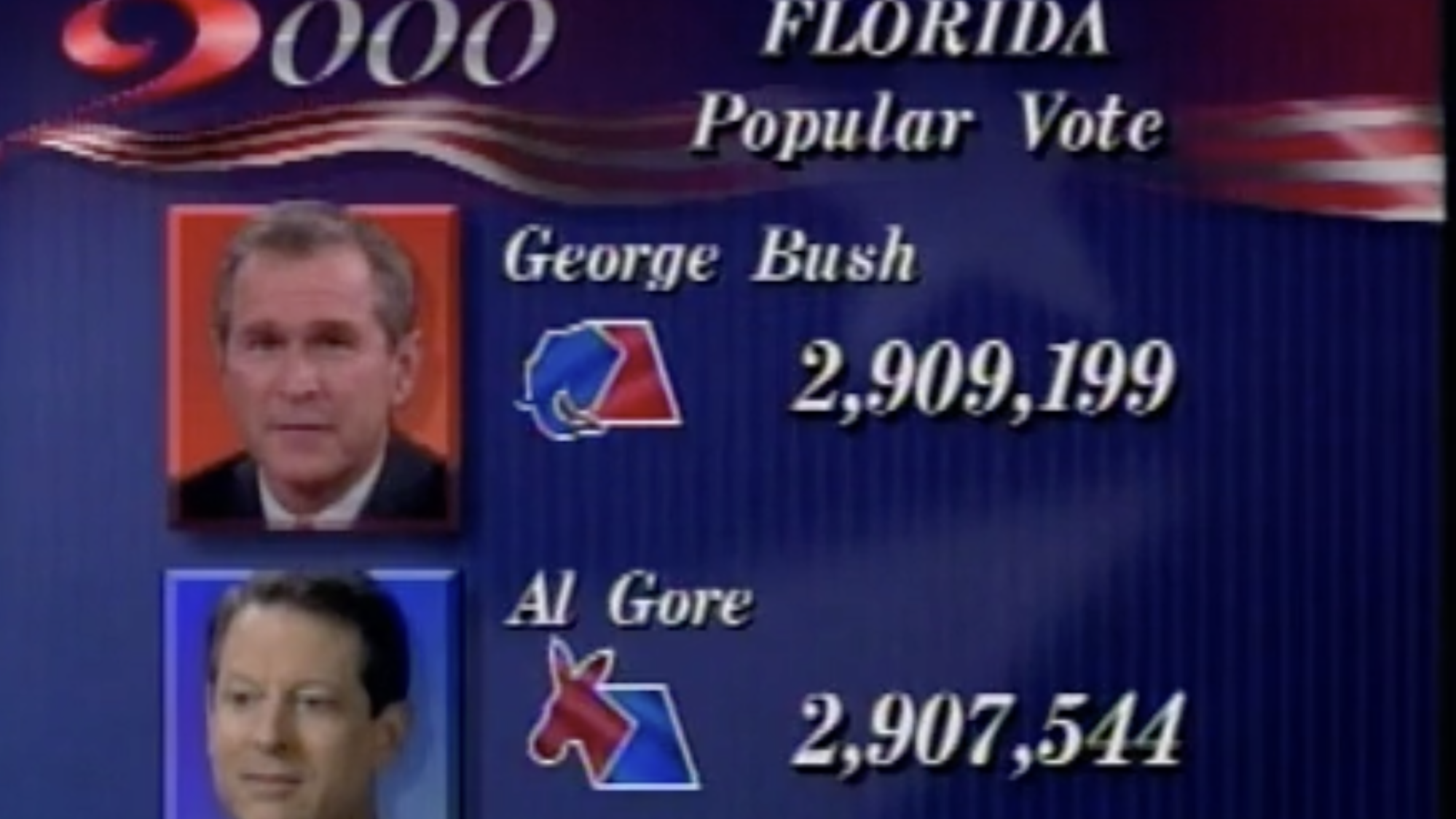
KATHERINE HARRIS: The certified result in the presidential race in Florida is as follows: Governor George W. Bush 2,912,790; Vice President Al Gore 2,912,253. Accordingly... (Crowd cheering) ... accordingly, on behalf of the state elections canvassing commission and in accordance with the laws of the State of Florida, I hereby declare Governor George W. Bush the winner of Florida's 25 electoral votes for the President of the United States.
KWAME HOLMAN: About two hours later, Governor Bush addressed the nation from Austin.
GOV. GEORGE W. BUSH: The election was close but tonight after a count, a recount and yet another manual recount, Secretary Cheney and I are honored and humbled to have won the State of Florida, which gives us the needed electoral votes to win the election. We will therefore undertake the responsibility of preparing to serve as America's next President and Vice President. This has been a hard-fought election -- a healthy contest for American democracy. But now that the votes are counted, it is time for the votes to count. The Vice President's lawyers have indicated he will challenge the certified election results. I respectfully ask him to reconsider. Until Florida's votes were certified, the Vice President was working to represent the interests of those who supported him. I did not agree with his call for additional recounts, but I respected his decision to fight until the votes were finally certified. Now that they are certified, we enter a different phase. If the Vice President chooses to go forward, he is filing a contest to the outcome of the election and that is not the best route for America. All of us in this election fought for our views. Now we must live up to our principles. We must show our commitment to the common good, which is bigger than any person or any party. We cannot change yesterday but we share a responsibility for tomorrow. Time runs short, and we have a lot of work to do.
KWAME HOLMAN: Today Bush focused on that work, meeting in Austin with his newly chosen chief of staff.
ANDY CARD: Secretary Cheney and I have talked a couple of times today. We may just open our own transition office. We'll be talking about that this morning.
REPORTER: How does it feel to be the White House chief of staff?
ANDY CARD: It's a great privilege and a great honor and Governor Bush is a terrific leader for the country.
KWAME HOLMAN: Bush asked the federal General Services Administration to release Presidential transition funds and office space to his transition team. But in Washington, a spokeswoman for the GSA said the agency would not authorize any money or space until there is a clear winner. This afternoon, President Clinton made an announcement regarding the transition issue.
PRESIDENT CLINTON: We are committed to maintaining a steady course. That means providing a smooth transition to the next President, whether it is Vice President Gore or Governor Bush. As you know an appropriate legal process is now underway. That process will take a few more days to play itself out. Our job is to do what we've done for eight years now: To focus on the business at hand. That is why I'm signing today an executive order creating a transition coordinating council. The council will provide the President-elect's team with coordinated services especially regarding personnel matters. This action and other efforts by the cabinet will well ensure that we are as prepared as we can possibly be for an orderly transition to the new administration.
KWAME HOLMAN: A short while later Vice Presidential candidate Dick Cheney criticized the General Services Agency's stand.
DICK CHENEY: Despite the decision, we feel it is our obligation to the American people to honor their votes by moving forward and assembling the administration that they've chosen in this election. Therefore at the direction of Governor Bush, we will proceed drawing on other sources. The Presidential Transition Act of 1963, as amended in 1988, specifically authorizes public funds for transitions but also makes provision for raising private money and contributions from private sources to supplement the public funds needed to defray the transition-related expenses. This has been done previously, most recently in 1992 by the Clinton-Gore transition. We plan to follow a similar practice now.
KWAME HOLMAN: Cheney went on to criticize Al Gore's decision to contest the now-certified vote in Florida.
DICK CHENEY: We find ourselves in the unique and totally unprecedented position. Never before in American history has a presidential candidate gone to court to try to change the outcome of an already certified presidential election. But whatever the Vice President's decision, it does not change our obligation to prepare to govern the nation.
KWAME HOLMAN: Meanwhile, Al Gore got some shoring up from the two top congressional Democrats. They placed a call to Washington to assure their party's standard bearers, they have the backing of Democrats on Capitol Hill.
SEN. TOM DASCHLE: We're encouraged by the numbers we've seen in Miami-Dade and Palm Beach and some of the other numbers around. We were just given a new tally this morning that if we counted all of the votes that have already been counted in some of the recount, we'd actually be ahead by maybe nine votes. So we're encouraged by that.
REP. RICHARD GEPHARDT: Al and Joe, let me just add that Joe knows that we've been on many conference calls with the House Democrats.
REP. RICHARD GEPHARDT: And they have been entirely supportive and continue to be entirely supportive of going ahead with this contest for the purpose of finding out how everybody voted in this election. And our members, as you know, feel very strongly that we need to have a fair and accurate count.
VICE PRESIDENT AL GORE: This really is about the larger principle that I outlined, but I want you to know that on a personal basis, I'm also very encouraged by what you said at the outset, that from your perspective there on the ground in Florida, if every vote is counted, there are easily more than enough to change the outcome and decide the election in our favor. It's about the principle, but there are more than enough votes to change the outcome, and that's an important factor as well.
KWAME HOLMAN: Reporter: Also today, the US Supreme Court rejected media requests for unprecedented TV coverage when the Bush campaign argues against hand recounts before the high court on Friday. Both sides in the Florida fight for the presidency have argued all court actions should be resolved no later than December 12, the day Florida must appoint its electors.
JIM LEHRER: Vice President Gore planned to address the nation later tonight. Now representatives of the Gore and Bush campaigns, I spoke with Senator Lieberman, the Democratic Vice Presidential nominee, earlier this evening.
JIM LEHRER: Senator Lieberman, welcome.
SEN. JOSEPH LIEBERMAN: Thank you, Jim. It's good to be with you.
JIM LEHRER: How far and how long are you and Vice President Gore prepared to go - the Florida vote?
SEN. JOSEPH LIEBERMAN: That's a fair question, and we just want a fair result. We want the votes that were cast on election day to be counted. That's exactly what we've wanted ever since that memorable election night, and that is the basis of our appeal to court today. The Florida Supreme Court has set out a schedule, and it specifically set the deadline for certification yesterday so there'd be two weeks and three or four days in which any contests, any appeals could occur by December 12, so that Florida's electors would never be prejudicedas the chief justice of the Supreme Court said...in other words, there are limits here. I also want to say that Vice President Gore has been very measured and balanced in his judgments here, and, there are other avenues of appeal but lawyers suggest it might have some strength, and the ones that we are pursuing, that Vice President Gore turned away from, because he, one, thought they might be too divisive, and two, might take more time than he wanted to take before this was resolved.
JIM LEHRER: Well, the legal schedules aside, is there a kind of public schedule too that the two of you have talked about? I mean, how far, how long can this go before whatever, wherever we are in terms of the courts we've got to back off?
SEN. JOSEPH LIEBERMAN: Well, we really haven't thought about that, although, again, I'd say we're operating within the timeframe that the Florida law and the Florida Supreme Court set out, and that is to have this all done by December 12th, and Florida's electors, certified and ready to participate in a vote on December 18th. The fact is, Jim, that if the two or three counties where hand recounts were requested because evidence was presented to those county canvassing boards that those recounts were justified - if those canvassing board has been able to proceed with their work and not been stopped by either actions by the secretary of state of Florida or legal actions by the Bush campaign or the Republican Party, it all would have been done by now. We think it can be done in a matter of days and, again, it's only about counting the votes that were cast, which is a sacred fundamental American principle, and every citizen's interest, we think, in having that happen surmounts everyone's desire, including our own, to have this end quickly, but this is a matter of days, not weeks, and the government is stable and not in crisis at all.
JIM LEHRER: What did you think of Governor Bush's kind of declaration of victory last night?
SEN. JOSEPH LIEBERMAN: Well, it was certainly premature, and in that sense I'd say respectfully it was unrealistic. Everyone --
JIM LEHRER: What should he have done?
SEN. JOSEPH LIEBERMAN: Well, I think he should have expressed pleasure - of course, that's up to him - but I'm sure he was happy that he was certified yesterday, but, beyond that, it's been clear from the day the Florida Supreme Court ruled last week and set the deadline of Sunday or Monday morning for the counting - for the hand counting to end and then specifically said there was time between that counting and December 12th to pursue any appeals left, and, of course, the Bush campaign itself took this matter to the United States Supreme Court, which will hear the case this Friday, so no one really had any reason to expect that the election would be over last night when the secretary of state did what everyone expected her to do. So I thought - I guess Governor Bush's remarks were tactical, but everyone knows that this election is not over until the court rules here.
JIM LEHRER: But on the tactical front, not only did Governor Bush do what he did last night, Senator Lott, the Senate Majority Leader, announced that on January 4th, he wants hearings to begin, confirmation hearings on the Bush cabinet nominees. Secretary Cheney held a news conference this afternoon and said they're going to open up a transition office here in Washington, even though they're not going to have official money from the federal government. Some kind of train is moving from a station, is it not, Senator?
SEN. JOSEPH LIEBERMAN: Well, you know, they're trying to move their train from the station, and certainly when it comes to beginning a transition, as Vice President Gore said last week, it's appropriate for both campaigns to begin a transition, as we have begun, to plan for it, so we will be ready, but the election is not over. It's like calling a baseball game after the seventh or eighth inning. Everyone understands that the rules here - and the rules are - the law of Florida as applied by the Florida Supreme Court say that there is at least an inning or two left before this particular game is over.
JIM LEHRER: Do you believe that you and Vice President Gore won in Florida?
SEN. JOSEPH LIEBERMAN: Yeah, Jim, I mean, and that is really at the heart of it. I certainly believe that a majority of people who went to cast their votes in Florida on election day intended to vote for Al Gore and me.
JIM LEHRER: How do you know that?
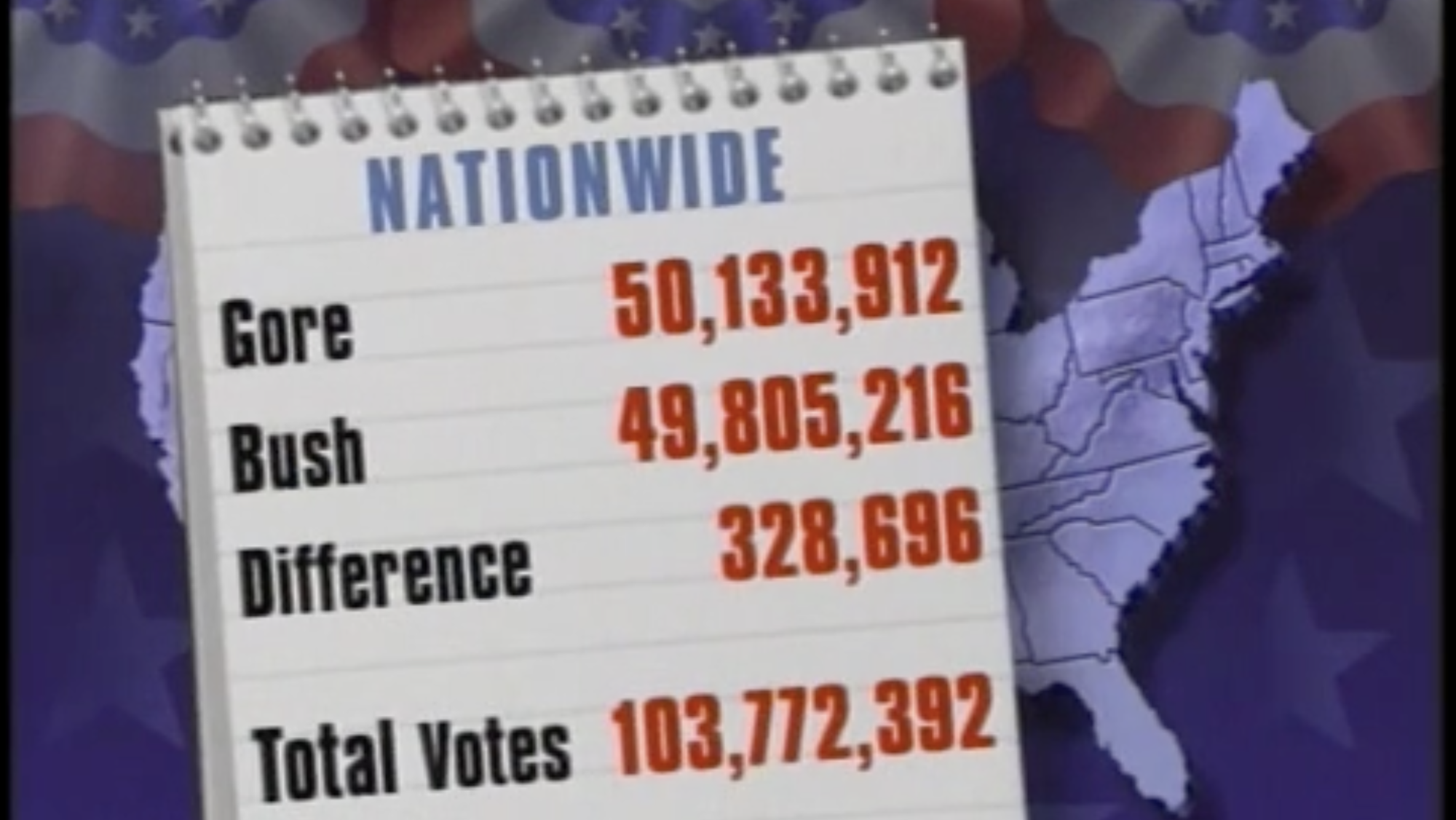
SEN. JOSEPH LIEBERMAN: Well, I don't know it exactly, and that's exactly why we are asking that every vote be counted. And, remember, though others have said that there have been two, three, four recounts - there are thousands of votes in Florida, particularly in Dade County, that have never been counted - not even once - and when that happens in our country, it compromises the fundamental constitutional principle of one person/one vote. And if we let it go by, particularly in a presidential election, I think it threatens the vote of every American, wherever they live, not just the vote of the people in Florida, so, yes, we believe that we carried Florida. We know we're ahead in the popular vote nationally. We know we won the popular vote by over 300,000. We know that we have 267 electoral votes. That's three short of the 270 required, and we believe we carried Florida, so we are doing what Americans are supposed to do, when they feel that they've been unfairly treated by government. We're taking our claim to the system of justice and we'll abide by that result.
JIM LEHRER: You're taking it to the system of justice and you're going to abide by the result, but you've just laid out a scenario for suggesting that if, in fact, it doesn't end with you and Vice President Gore in office as President and Vice President of the United States, you were robbed. Is that the way Americans should feel about this now?
SEN. JOSEPH LIEBERMAN: Well, if there is not a completion of the counting of the votes that were cast in Florida - and we believe - and it is a fact that at least 10,000 votes in Dade County in Florida, have never once been counted - then a cloud will be over the next President. And that's part of - that's at the heart of why Al Gore and I are pursuing this relief to come to a fair result, because whoever is elected - and we still don't know how those votes would count - who they voted for - but whoever is elected the next President, as many Americans as possible, hopefully an overwhelming majority, would feel that the election was fair and square when the next President takes office, so that they are not in doubt about the legitimacy of that election. So I'd say and Al Gore said this probably two weeks ago when he made that offer to Governor Bush, if you agree to hand count the votes in these three counties - or even if you think that's somehow unfair, hand count all the votes in Florida, we'll abide by that result because we will have felt that essentially the process was fair and the result, therefore, was legitimate.
JIM LEHRER: But let's say you lose in the courts. And let's say those hand counts do not happen, and George W. Bush is the President of the United States. Should the American people say, hey, the wrong guy is in office because those votes were not counted in Florida?
SEN. JOSEPH LIEBERMAN: Well, I hope that doesn't happen and I hope it doesn't happen because I don't think it's good for the country, and I mean, the process. Look, if Governor Bush and Secretary Cheney are elected in a fair process, Vice President Gore and I have said over and over again that we will give our support to them, and I, as a member of the Senate, will do everything I can to cooperate with them in the interest of our country. But this ought to be done in the right way, and when it's done in the right way, then I think not only Vice President Gore and I but every other American can feel that we met this test. Most unusual - unprecedented occasion - it begins with a fact, which is that this is the closest election in American history....
JIM LEHRER: It's a tie essentially, isn't it?
SEN. JOSEPH LIEBERMAN: It's essentially a tie, so that's why every vote that was cast ought to be counted and why our system is being tested - it's important not only to us and our own sense of self-government and adherence to the values and democratic principles that have made us great, but the whole nation, the whole world is watching us, and we want to stand for the principles the world associates with us, which is free and fair elections.
JIM LEHRER: Have you and Vice President Gore discussed how long you stand? In other words, there are public opinion polls - there are already two or three out and there are editorials saying, giving you two all kinds of advice on maybe it's time to go now; maybe it's time to try to put the country back together, et cetera, et cetera, et cetera. Have you discussed that element in this, above and beyond what the courts may or may not do?
SEN. JOSEPH LIEBERMAN: Not specifically. I think that the Vice President feels and I know that I feel that there's an important principle involved here. We feel that the vote that was certified last night by the secretary of state of Florida was inaccurate and incomplete and, therefore, it is unfair, and we want to take that sense of unfairness to the courts, and ask the courts to decide what is right. We don't want this to go on interminably. We think it could be done in a matter of days. The Vice President is mindful not only of achieving fairness for us as candidates and for the 50 million Americans who voted for us but also is very mindful of what is best for this country, and while I can't say that we have specifically discussed an answer to the question that you have just raised, Jim, I can tell you that Al Gore is not going to do anything that will hurt this country. I think the people understand that's what is happening now is important. Somebody said to me the other day that people seem more interested in the post election period than they were in the campaign. I don't think the American people are out of patience now. I think they know that something significant to our democracy has happened, that every vote must be counted. And thousands have not yet been counted in Florida. And it's much better to get it right than to get it done quickly. The transitions are beginning in both campaigns. The President is in office until January 20th. There's stability at the heart of our government, and when a decision is made, and if the court allows, it will be made in a matter of days, we can move on to our future, and we can move on with a much greater prospect of being united and having the kinds of bipartisan agreement that make the government gothat I've always worked hard on in the Congress and not have a sense of division with people feeling that somehow this was a raw deal.
JIM LEHRER: Okay. Thank you, Senator, very much.
SEN. JOSEPH LIEBERMAN: Thank you, Jim.
JIM LEHRER: Now the other side and to Margaret Warner.
MARGARET WARNER: Joining us from Tallahassee is one of Governor Bush's advisers, Montana Governor Marc Racicot. Thanks for joining us, Governor.
You just heard Senator Lieberman say that if the 10,000 votes in Miami-Dade that were spit out by the machine and registered no votes, if they aren't counted that a cloud will be over the next President. Do you think that's true?
GOV. MARC RACICOT: I don't think that's true at all. To tell you the truth, I find it very disappointing. I think it's very unfortunate and it's inaccurate to reflect that there are 10,000 ballots in Miami-Dade County that weren't counted. There simply were no votes that were cast for the President in that particular election, and as a consequence of that, they can't in fact count. So this is a real disappointment for the Gore- Lieberman campaign to reflect to the American people that what ought to occur is that every ballot ought to be counted -- as a matter of fact particularly so when they have fought so hard to keep out thousands of absentee ballots in Seminole County and more than 200 votes that were cast, they've tried to have excluded in Nassau County. So the notion that they want every vote to count is just simply not the case. What Senator Lieberman is trying to reflect, I think, is just simply not what I understand, what I saw with my own eyes through three-and-a-half days to be the accurate situation as we've described it from here.
MARGARET WARNER: Just so I understand, you and Governor Bush believe, in other words, that all the votes were counted?
GOV. MARC RACICOT: Well, they clearly were counted. These are ballots that do not have one of the punches for President poked out of the ballot. So, there may be a mark or a scratch on the ballot from which the Gore-Lieberman campaign alleges you ought to try and discern whether or not that's a pause mark or that somebody intended to vote. And these are people they don't know -- they've never spoken with -- they have no connection to. How in the name of God could you ever claim to be able to do that with a reasonable certainty, which is required by Florida law?
MARGARET WARNER: Now, they would say that these same ballots they're talking about have never been hand-counted at all and that many of the-- they're more than marks, that they are punched through perhaps and that these are the kinds of votes that were counted in other counties such as Broward or Palm Beach. I don't want to mention the word chad, but I guess I have to. These are ones where it was punched through but maybe it was hanging or whatever. You're saying that those shouldn't be counted anyway.
GOV. MARC RACICOT: No. I think what you heard Senator Lieberman say is that there are 10,000 ballots that have never been counted even once. I believe that's a direct quote. The fact of the matter is they were counted and then they were recounted. And, as a consequence of that, you just simply cannot truthfully make that allegation.
MARGARET WARNER: Let me go back to his larger point which had to do with whether there are doubts about whoever wins. I noticed in the "Washington Post"/ABC News poll today which did say that 60% of Americans now thought it was time for Gore to concede, nonetheless only about a quarter said they were very confident that the Florida count was accurate. Does that trouble you or Governor Bush at all? Do you think there's any danger that, in fact, there could be a kind of cloud over him?
GOV. MARC RACICOT: Well, we know, of course, what the facts of the situation are. And we know that this was a very difficult election as was reflected last night by Governor Bush, but we also know that the American people expect that the law will be observed. It's been very unfortunate that the Florida Supreme Court decided that they would rewrite the law and change the rules, not only in the middle of the stream but after the game was completed. They know that there have been ample opportunities for the votes to be counted, recounted and in some instances three and four times, and I believe that the American people understand plainly that even though there have been challenges associated with this election, clearly when Governor Bush has been certified with the highest number of votes in the state of Florida, thereby achieving the highest number of electoral votes in this country, that he will set about to gain, I think, the opportunity for them to invest their confidence in him as he serves them ably into the future. So, no, I don't think that that's going to be a challenge or a difficulty for him as he assumes the presidency.
MARGARET WARNER: Let me ask you about one other thing Senator Lieberman said. He noted, of course, that Governor Bush has an appeal in the courts also at the US Supreme Court. He said given that, he thought it was both premature and unrealistic for Governor Bush last night to have essentially-- I don't want to put words in his mouth, I don't remember his exact words-- but to declare himself as having won the presidency. How do you react to that?
GOV. MARC RACICOT: Well, I think what Governor Bush did last evening, and I believe the American people understand this precisely, is to reflect to the American people that it's been a difficult contest, that it has been healthy, that the American people expect some finality, that we need to draw to a close, and there are some very grave and very serious responsibilities here that the next President has to assume. And he was declared the victor on election night. He had the most number of votes at least. He had the most number of votes after the recount. He had the most number of votes after the first certification and again after the last certification, and now it's time to move on. He has to face these responsibilities of forming a government. So that's what he was trying to reflect even though it's been difficult, we have to bring about those processes that will allow for us to serve the American people as they have a right to expect.
MARGARET WARNER: Last week before the Florida Supreme Court, Governor Bush's lawyer, Michael Carvin, began by saying, "look, the time to be contesting, challenging, any of these results are after certification, during the contest phase." Is the Bush camp now suggesting that nonetheless, it is inappropriate for unseemly for Vice President Gore to be challenging these three counties or several counties during this contest phase?
GOV. MARC RACICOT: Well, the reality is everything that the Vice President has requested in reference to this particular situation has been granted. He has received the opportunity to count and to recount and count again and in some instances again. And the fact of the matter is we know many more facts and circumstances now than we knew when those particular arguments were made. And as a result of that what the Vice President is seeking is an opportunity to repeat the same arguments that he presented over a week ago. We know what the evidence is now, and there's no reason to continue on with long, lengthy, difficult, complex legal battles that will achieve no more finality than what we already have.
MARGARET WARNER: The issues before the US Supreme Court on the governor's appeal on Friday aren't directly on point on the issues that now Vice President Gore is raising in these challenges. What do you expect the US Supreme Court to really settle here?
GOV. MARC RACICOT: Well, we expect the United States Supreme Court to vindicate the principles of law that were embodied as a part of Florida law prior to the time, enacted by the legislature, prior to the time that the Florida Supreme Court chose to legislatively, assume a legislative function not properly reserved to that branch of government and to declare that to be inappropriate and in violation of the Constitution in federal law. That's what we expect the United States Supreme Court will do when they consider this particular case.
MARGARET WARNER: But I mean, do you expect that somehow that will put an end to the challenges? I mean, in other words, do you think it will end this thing?
GOV. MARC RACICOT: Well, that will depend upon what the United States Supreme Court says precisely. It's our expectation that that principle I just articulated is what, in fact, the court will do. But whether or not we can predict with any degree of certainty exactly what will happen I think is a matter of great speculation.
MARGARET WARNER: Governor Marc Racicot, thanks for being with us.
GOV. MARC RACICOT: Thank you.
JIM LEHRER: Ray Suarez has more on the legal situation.
RAY SUAREZ: And joining me to sort out the new cases in Florida and the arguments coming to the United States Supreme Court are law professors Pam Karlan of Stanford University Law School and Doug Kmiec of Pepperdine University who has informally advised Governor Bush's legal team. Also joining us from Florida is Jon Mills, interim dean of the University of Florida Law School. He's a former Democratic state legislator and served as speaker of the House in Florida. Jon Mills, let's start with you. In Florida, what Al Gore's lawyers began this afternoon is technically referred to as a contest. What is it?
JON MILLS: Well, I think it was accurately described as once you actually have a certification of election, then a contest is timely. So the Gore attorneys are contesting this based on several criteria. They're alleging misconduct, they're alleging that legal votes were not counted and importantly they're requiring the court to determine whether if you accept all of those arguments, it could affect the outcome of the election. So you would have to prove both aspects of that; that there was either misconduct or legal votes that were not counted and that ultimately that would affect or potentially the outcome of the election.
RAY SUAREZ: In effect who is the defendant here? When Al Gore goes into a Florida state court, is it George Bush and his campaign that he's arguing against or the state government itself, which certified the election?
JON MILLS: The relief they're seeking in looking at the complaint was actually for the court to order the canvassing commission to change the results of the election. So I presume that that would be the relief sought would indicate the actual defendant in the case.
RAY SUAREZ: Doug Kmiec as you read the statute does Al Gore's team have a particularly heavy burden going into this.
JON MILLS: I don't think it will be easy to any contest of a certified election. The certified elections that have been overturned in the past have been clear results of fraud. We had the Miami mayor's race that was overturned because provably absentee ballots were filled out by individuals, and those ballots were thrown out. So I suspect you have to show both the ballots were legal and the evidence-- which they're alleging by the way, is that the Miami Dade recount could result in a 600-vote swing and a recount in Palm Beach would result in 215. So, collectively they're alleging that that could change the result of the election.
RAY SUAREZ: Doug Kmiec, same question.
DOUGLAS KMIEC: I agree with the assessment of Dean Mills. I think it is a very heavy burden. I think this is the... the arguments that we're seeing here are very tired, worn-out arguments; the arguments that Vice President Gore has tried before for the last several weeks. In essence, the Vice President was given an unauthorized overtime period; it was authorized only by the Florida Supreme Court. He had an opportunity to test these theories then. I don't think they'll be any more successful now.
RAY SUAREZ: Pam Karlan, the way you read the statute governing contests, are there any rays of hope, sort of like the lights shining through those ballots, that the Gore team may take some comfort in?
PAM KARLAN: The statutory standard is whether there were votes cast legally and didn't get counted and some of the allegations are about those and also whether there's reason to believe that had the votes been counted the result would have been different. And if you believe the allegations in the complaint, then, yes, there's a ray of hope here. You don't have to show fraud. You don't have to show misconduct under Florida law. All you have to show is that there were votes that weren't counted and that those votes, if counted, would change the outcome of the election.
RAY SUAREZ: Two things though: There are votes that weren't counted and that counting them would change the outcome. Is that difficult to prove given the certified numbers in Florida?
PAM KARLAN: We know what the margin is in the certified count. And so if you can show that there were more ballots that weren't counted than that amount, that's enough. So, for example, if you had one voter who filed a lawsuit and said I showed up at the polls at 7:30, but I wasn't allowed to vote because they closed the polls early, that voter might able to show that he wanted to cast the ballot and wasn't permitted to cast it, but one vote wouldn't change the outcome of this election. Several hundred votes would potentially change the outcome of this election. That's what the plaintiffs will have to show in this case.
RAY SUAREZ: But the contest - go ahead Doug Kmiec.
DOUGLAS KMIEC: I think we're forgetting that none of these votes were unlawfully excluded. The Vice President was given his opportunity, in each of these counties to have a recount. Some of the counties chose to have recounts; others chose not to. They had the discretion to decide under the state law.
PAM KARLAN: They had the discretion, Doug, before certification. After certification, this is no longer about whether the county had discretion to count the votes or not. It's a question of whether the votes were actually cast and that's a decision under Florida law for a court to decide.
DOUGLAS KMIEC: Yes, but as you know, the courts are quite deferential on these questions unless there is some showing of misconduct or fraud or other things. And unless you can show that there were, in fact, actual cast votes, not just simply voter error, that the Vice President can point to.
RAY SUAREZ: Well, Dean Mills, the clock is ticking, at this moment, down to December 12 when all the electors have to be chosen. Can a contest, especially one that involves the results in three different counties with three separate points at issue, can it be wrapped up by December 12?
JON MILLS: Well, if you appoint a special master or appoint a group to do the actual count, this is different now. We're now in a contest stage where a judge has control over how to do the count. We don't... we no longer are going through the canvassing boards where three members have to, by law, review this. So, in this contest phase, you may actually have an opportunity to do it in a briefer period of time if a judge decides that he wants to do that.
DOUGLAS KMIEC: Ray, I think there may be an easier way out of this. It's the question you asked earlier about the United States Supreme Court. That's going to be a very important ruling because, in essence, Governor Bush is arguing that the changes in the Florida election law that the Florida state Supreme Court had made, namely extending the deadline, disregarding the discretion of the secretary of state, were unconstitutional, not authorized by the grant of power given to the state legislature, not the court. If that argument prevails, then the overtime period that the Vice President was given is essentially unlawful, and any of the recounts that occurred in the overtime period can be reasonably and properly disregarded under the law, and so the certification that counts is maybe not the one last night but the one from November 14, and that's a much sounder outcome.
RAY SUAREZ: But does that really matter given the fact that we've opened a whole new process at this point before a court in Leon County? The United States Supreme Court may rule that the earlier Florida ruling was out of bounds but this seems...is this a whole new thing that would have to be responded to, in effect, by another case?
DOUGLAS KMIEC: Well, the two inter-relate because, in essence, the Vice President is arguing that the flaws that he perceives in the Florida process are things that he discovered in the overtime recounting period. If those flaws are, in fact, nonexistent because the overtime period was unauthorized, then that that should cut to the quick the notion that all the votes haven't been counted. They have been counted in accordance with the law of Florida that existed on election night.
RAY SUAREZ: Pam Karlan, how do you see the US Supreme Court arguments relating to what's going on now in the contest phase?
PAM KARLAN: I think with all due respect, Doug Kmiec is simply wrong about this. What the United States Supreme Court is going to decide is a question of whether the Florida Supreme Court correctly engaged in statutory interpretation rather than legislation. I personally think that's what they're likely to decide. But on November 7, on November 14, as today, Florida's election law provides for post- certification contests, and the rules in those contests ask whether ballots were, in fact, cast. And that question of whether these votes were, in fact, cast for Vice President Gore or Governor Bush or someone else has not yet been resolved and nothing the US Supreme Court decides in the case in front of it is going to dispose of that question. Now, the fact that we may know that some of these ballots weren't counted because of recounts-- recounts that began, although they didn't end by the November 14 deadline-- doesn't put the genie back in the bottle. It's a little bit like the story of Adam and Eve and the Garden of Eden. Once you take the bite out of the apple you can't go back and say we no longer know what happened.
RAY SUAREZ: Quickly, Doug Kmiec, take another bite out of the apple yourself. How do you respond to Professor Karlan?
DOUGLAS KMIEC: I will rest with my position that I think the Supreme Court will say that the Florida Supreme Court was out of bounds and when they were out of bounds what happened between November 14 and the agony that we went through of last night, most of that can be set aside. And the interesting is we do have a certification now in Florida. I think most people say the Vice President was given his second bite of the apple, if not third and fourth bite of the apple, and he simple I'm hasn't found the votes. It's time to conclude the matter.
RAY SUAREZ: Before we close, Jon Mills, a little bit about Seminole County. There it's not the Gore campaign but other citizens that are challenging absentee ballots that were filled out by a Republican operative. Can that be wrapped up quickly?
JON MILLS: That has actually been removed to Leon County as well today. So I suspect they will be hearing that right away. The allegation there is misconduct, and it's one of the first where there's been a more firm allegation of misconduct, a process in sending out the absentee ballots where Republicans were invited into the elections office to fill out some of the actual blanks in those ballots that were sent properly. The question is, would that actually affect the outcome? Is that tampering or misconduct with an earlier election process, or is it actually a conduct that could affect the results of the absentee ballots? That will be a question of fact for the court.
RAY SUAREZ: Dean Jon Mills, Pam Karlan, Doug Kmiec, thank you all.
JIM LEHRER: And now some closing words of analysis from Shields and Brooks; syndicated columnist Mark Shields, Weekly Standard contributing editor David Brooks. David, so how close are we now tonight to knowing who is going to be the next President of the United States?
DAVID BROOKS: How many more shopping days until inauguration day?
DAVID BROOKS: I think 45. I'm hoping to lose ten pounds before I have to select my gown. It depends who you ask. If you go to the Gore campaign, it's patience personified. It's Yoda up there on the Hill waiting forever. If you go to the Bush campaign, they've already started. George Bush is now acting like a President-elect doing what President-elects do, which is having lunch a lot with people who think they're smart enough to be secretary of treasury and having them suck up to him. He has been doing that and I suspect he'll be doing that to give the sense that we're in a landing pattern, this is almost over.
JIM LEHRER: Is it working for him? Is this a smart thing for him to be doing?
DAVID BROOKS: Well, I think it's a smart thing in part because of who he's going to name. One of the great unreported facts is that Bush named a chief of staff yesterday and it sort of got lost in the shuffle.
DAVID BROOKS: Andrew Card, a moderate Republican, he's from Massachusetts -- a guy who is known as one of the moderates in the former Bush-father administration, and if he goes on and names people like that, it will give conservatives a lot of sighing and moaning and groaning but it might cause some Democrats to say, hey, we could work with these people and there might be some frittering away on the Gore side.
JIM LEHRER: Frittering away on the Gore side?
MARK SHIELDS: Not yet, Jim. I think a couple of factors contribute to that. First, Don Evans, to support David's point, the chairman of the Bush campaign, said there is God-loving people all over this nation that are getting impatient. Now I assume that there are God-loving people, they do great focus groups, the Bush people. There may be God-loving people who are also supporting Al Gore and probably agnostics supporting Bush. But I do think if you look at it, every time the air starts to go out of the Democratic side and they start to back off, they are rescued -- Al Gore and Joe Lieberman are rescued by the Republican congressional leaders. I mean, Dick Armey says he won't go to the inaugural. Tom DeLay dispatches his minions and they are his minions according to the Wall Street Journal today - down there -- all expenses paid to Florida to foment the very strife we saw on the 19th floor of the Miami-Dade County building last week that led - was followed by calling off the count in Miami-Dade County. All of a sudden, Democrats say, there they go, they're going to take it to Congress; they're threatening the legislature and somebody might be willing to say to Al Gore, you might consider backing off. Then they say, Al, we're with you 110% because of the... It's exactly, it's impeachment redux. They're doing exactly what they did in impeachment.
JIM LEHRER: So when Gephardt and Daschle, as they did today, got on the phone and did their conference call, that was real?
MARK SHIELDS: Yeah. I mean, I think the correspondent from Indianapolis has already gone public.
JIM LEHRER: A member of the house.
MARK SHIELDS: That's right. A member of the House - and said they ought to think about capitulating or conceding. I disagree with David on what George W. Bush did last night. I'd like to... Remember Joe Paterno - Joe Paterno, the great Penn State football coach, used to say to his players, when you get to the end zone, when you score a touchdown, act like you've been there before. Don't do the chest thumping.
JIM LEHRER: Tom Landry of the Dallas Cowboys used to say that.
MARK SHIELDS: In other words, don't do the tap dance. Don't taunt; don't thank the Almighty and all the rest of it. You know, you've been there before. You might get there again. I thought there was a little bit of self-congratulations in that tap dance that Governor Bush did last night.
DAVID BROOKS: Well, we now know two things about the Bush administration, if there is one. One, the Bushes are always twice as confident as they should be about any outcome. Second, is that given the choice of five strategies, they choose them all. They try everything. There were five strategies in that speech last night. Some of them were quite conciliatory.
MARK SHIELDS: That's right; I agree.
DAVID BROOKS: Some were a slap in the face to the Democrats, which did have the effect of unifying the Democrats.
JIM LEHRER: But the idea -- forget the effect on the Democrats. The effect on the American public that here he's saying I'm the President-elect, and I call on Vice President Gore to reconsider the challenge and he did it in a very kind of conciliatory way. Does that have an effect, do you think, on the public saying, "okay, come on. Let's move over?"
DAVID BROOKS: If Gore looks like the guy in the Monty Python skit, I'm not dead yet, then it begins to be a problem, but I really don't think public opinion matters here. The people who matter are rank-and-file Democrats. Bush has to win them over so they'll abandon Gore. Gore has to keep them fighting. There is no neat way for Gore to get to the White House now. It would take a court overturning the result. You would have bedlam here; you have the Florida legislature bedlam there and the Supreme Court meeting here. It's going to be a maelstrom. And Gore might as well ignore public opinion. He has to pay attention to his rank-and-file if they'll stick with him up the hill.
JIM LEHRER: You agree with that?
MARK SHIELDS: Well, I agree with it to a point. Here's the argument they make. Al Gore won the popular vote. Al Gore led -
JIM LEHRER: That's not supposed to matter.
MARK SHIELDS: No -- but 125 years we've never had a President who didn't win the popular vote who won the presidency. They think Al Gore won Florida. And, you know, some of them will even quote the great Ferdinand Marcos line who said to one of his defeated opponents, you may have won the vote but I won the count. There's a sense there that they feel especially with the Miami-Dade with the 10,000, Margaret Warner's interview with Marc Racicot, the very able governor of Montana, but 10,000 votes that really never have been looked at. That's their case.
JIM LEHRER: Never been looked at by hand.
MARK SHIELDS: Never been looked at by a human being. Never been looked at by a human being.
JIM LEHRER: But by machine.
MARK SHIELDS: That's right. Okay - which obviously was the subject of most of the recounts in both Palm Beach and Broward. So what Al Gore has to do, he has to make a case to the public and, you know, starting tonight, simply saying, "look, this is not-- I'm not a sore loser. Do I want to be President? You better believe I want to be President. So does George W. Bush and I'll do everything I can legally to get there. I'm not going to do anything illegally; I was ready to concede on election night. I was on the way to concede. I can take defeat. It isn't that. Let me tell you why -- I think he has to make the case because he basically has from now until Friday because the Bush votes appealed the case to the Supreme Court, last night's declaration by the secretary of state was not final. It was not the ultimate resolution because we still have the Supreme Court argument on Friday. So I think Gore has to make a case tonight that I'm not a sore loser, that this truly-- there's an end game, that there's a date certain by which this thing is over, that it's not going to be lapsing into Washington's Birthday or, you know, into Easter as to whether George Bush is going to be opposed by some renegade judge in Citrus County.
JIM LEHRER: In retrospect, David, forget the legal part here but the decision by the Bush folks to go to the US Supreme Court, may that turn out to be something that is going to bite them?
DAVID BROOKS: Well, because it only affects the certification, not the contest phase that we're in. I think their strategy now is to keep all the balls in the air and just who knows what's going to happen? It also has a psychological effect on the courts in Florida, on everybody in Florida knowing that the big court up there is looking over their shoulder and possibly going to pounce if they overreach the way Florida Supreme Court did.
JIM LEHRER: Isn't there a spectacle aspect to this now whether you have a musical comedy or an operetta where you have a guy coming out saying I'm the president of the world and then the other guy saying, oh, no, you're not; I'm the president of the world? I mean is it something that can go on for a few more days without people saying, "oh, come on. Come on?"
DAVID BROOKS: Ithought that call today with Gephardt and Daschle and Lieberman and Gore was like something out of the politburo, the delegate from East Germany swears eternal fealty to the delegate from the Soviet Union. There is real unity there but they are going to play-acting to such an extent that it is draining. To be honest, I haven't noticed a great deal of impatience in the American people. People are looking for parking spots at the mall, not paying attention to this.
JIM LEHRER: Do you agree? It's all kind of in the chattering class?
MARK SHIELDS: I think I agree with David. I thought the, I mean the idea that Tom Daschle picked up Dick Gephardt this morning and said, "hey, what do you say, let's go to Tallahassee. Have you ever been there? We'll call Joe and Al while we're there."
DAVID BROOKS: Let's sit around the phone.
MARK SHIELDS: I thought, you know, two able politicians not at the top of their respective parties in the Congress, it was kind of a bizarre setting. But, Jim, we're talking about an electorate that has twice in their lifetime for most of them lived through impeachment of elected presidents: Richard Nixon and Bill Clinton. I mean, your musical comedy is not too strained - I mean -- this is in overtime. I mean, this is an extra quarter. This isn't even, this isn't any approaching the Super Bowl. I mean, on both sides you have parties saying this is really tense. This is tension city or some other lousy metaphor. It isn't. People are interested. I think people's interest will start to wane, and I think Gore has to make a strong case as to why he's doing this and he's just not a sore loser. But I don't get a sense that people in the streets, that it's breaking up families.
DAVID BROOKS: The legal circus atmosphere does it. This unholy marriage between lawyers and journalists have been going on from Nancy Kerrigan - it goes to O.J. Simpson - it goes to Elian Gonzalez. It's one long comic opera; the same characters, different circumstances, all from the same courthouses now, we're repeating ourselves -
MARK SHIELDS: More attacks on Alan Dershowitz.
DAVID BROOKS: How did you know I was going there? The problem is what Jim Baker I thought pretty effectively said -- this ought to be settled by voters and not the courts. People could get fed up with the courts. And Gore also has to explain why the further away we get from election day, the better - the more accurate the vote count is. That also leads to a shambolic situation.
MARK SHIELDS: That is Jim Baker who took it from the federal court, appealed to the Supreme Court, of course. Let's point that out.
JIM LEHRER: Gentlemen, thank you very much for pointing out all the things that you pointed out.
JIM LEHRER: And in the other news of this day, there was a national election in Canada. Prime Minister Chretien is hoping his liberal party keeps its majority in the House of Commons and thus elects him to a third five-year term as leader of the country. The strongest challenge came from the conservative Canadian Alliance based in western Canada. Haiti held a Presidential election on Sunday, final results are not yet known, but former President Aristide was expected to win. A major opposition boycott of the vote saying intimidation and violence had prevented their campaign. Aristide was toppled by a military coup in '91 but a US-led invasion in '94 restored him to power. He was forced to step down in 1996 by a constitutional ban on consecutive terms. Back in this country, the US Supreme Court agreed to consider whether medical use of marijuana is legal. The Justice Department is trying to stop an Oakland, California group from giving the drug to the seriously ill for pain relief. Current federal law makes distribution of marijuana illegal, but Californians voted in 1996 to legalize it if recommended by a doctor. Eight other states have similar laws. We'll see you online and again here tomorrow evening as the struggle for the presidency continues. I'm Jim Lehrer. Thank you and good night.
 Previewing the Polls: Absentee Ballots, Votes by Mail, and Exit Poll Data (2000)
 Election Night 2000: One of Political History’s Longest Nights (2000)
 Assuring Faith and Confidence in the Electoral Process and the Rule of Law (2000)
 “History on Hold” as Election Officials Count and Recount Votes (2000)
 Margins of Error v. Margins of Victory: Voting Technologies and Election Math (2000)
 Debating the Role of the Electoral College (2000)
 To Recount or Not to Recount: The U.S. Supreme Court Weighs In (2000)
 “A Journalistic Crime Against Accuracy?” Broadcast Reporter Regrets Election Night 2000 Coverage (2001)